In 2022, Alphawood Exhibitions presented The First Homosexuals: Global Depictions of a New Identity, 1869-1930 at Wrightwood 659 in Chicago. It included more than 100 paintings, drawings, prints, photographs, and film clips drawn from public and private collections.
This year, an expanded version of the exhibition, The First Homosexuals: Global Depictions of a New Identity, 1869-1939, featuring more than 300 works of art, will be held at Wrightwood 659 through July 26 and will then travel internationally. The exhibition analyzes the art created around the globe in the first 50 years after the term “homosexual” was coined.
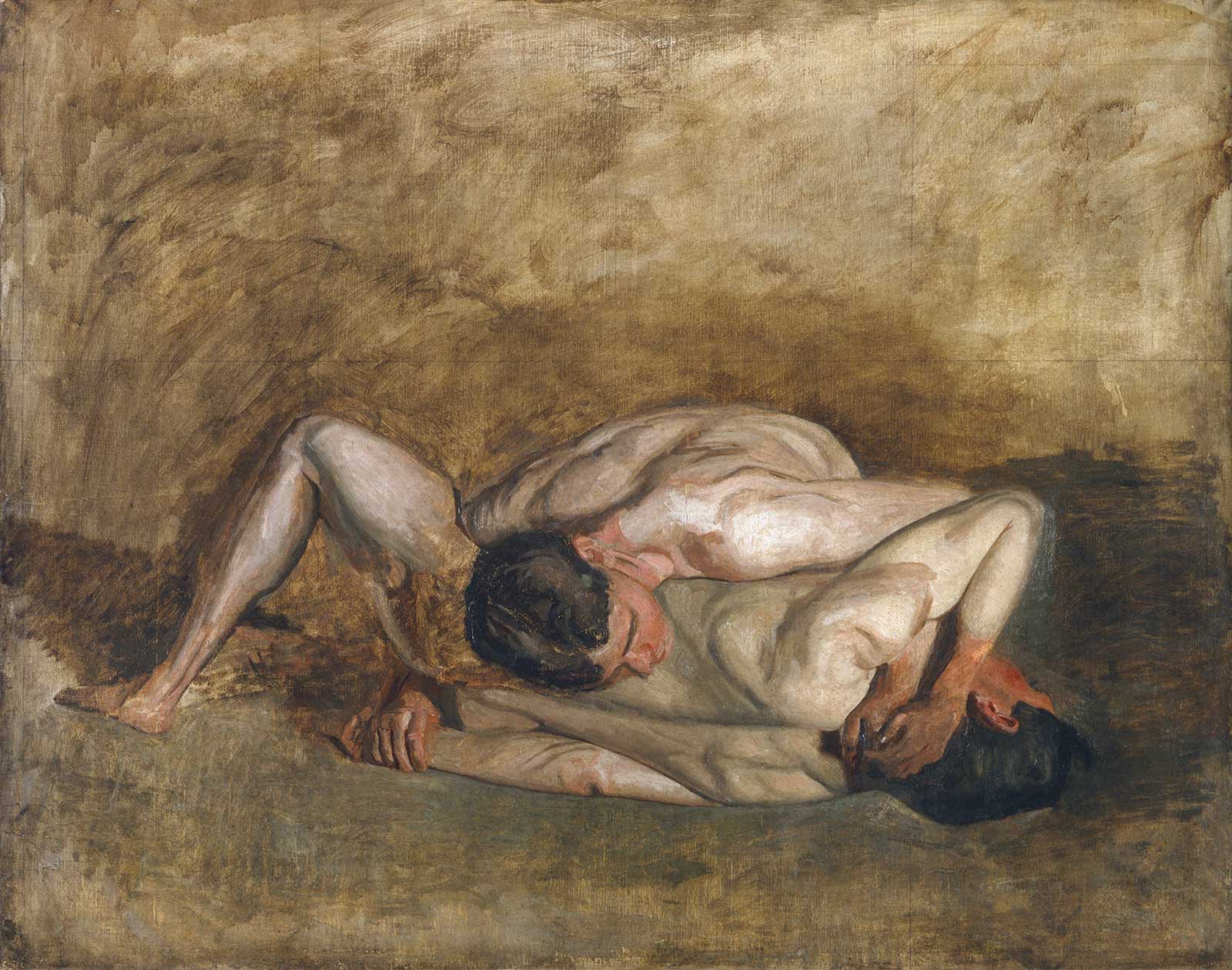
Thomas Eakins (1844-1916), Wrestlers, 1899. Oil on canvas. Philadelphia Museum of Art: Bequest of Fiske and Marie Kimball, 1955, 1955-86-14.
The head curator is Jonathan D. Katz, professor of practice in the history of art and gender, sexuality and women’s studies at the University of Pennsylvania and a founding figure in queer studies in art history. The associate curator is Johnny Willis, curatorial fellow at Wrightwood 659.
The coining of the term “homosexual” in 1869, broke sexuality into a binary system that increasingly placed homo and hetero as opposites but began to allow for homosexuality to be considered not just an act but an identity, a way of being.

Romaine Brooks (1874-1970), Le Trajet (The Journey), ca. 1911. Oil on canvas. Smithsonian American Art Museum. Gift of the artist, 1968.18.3.
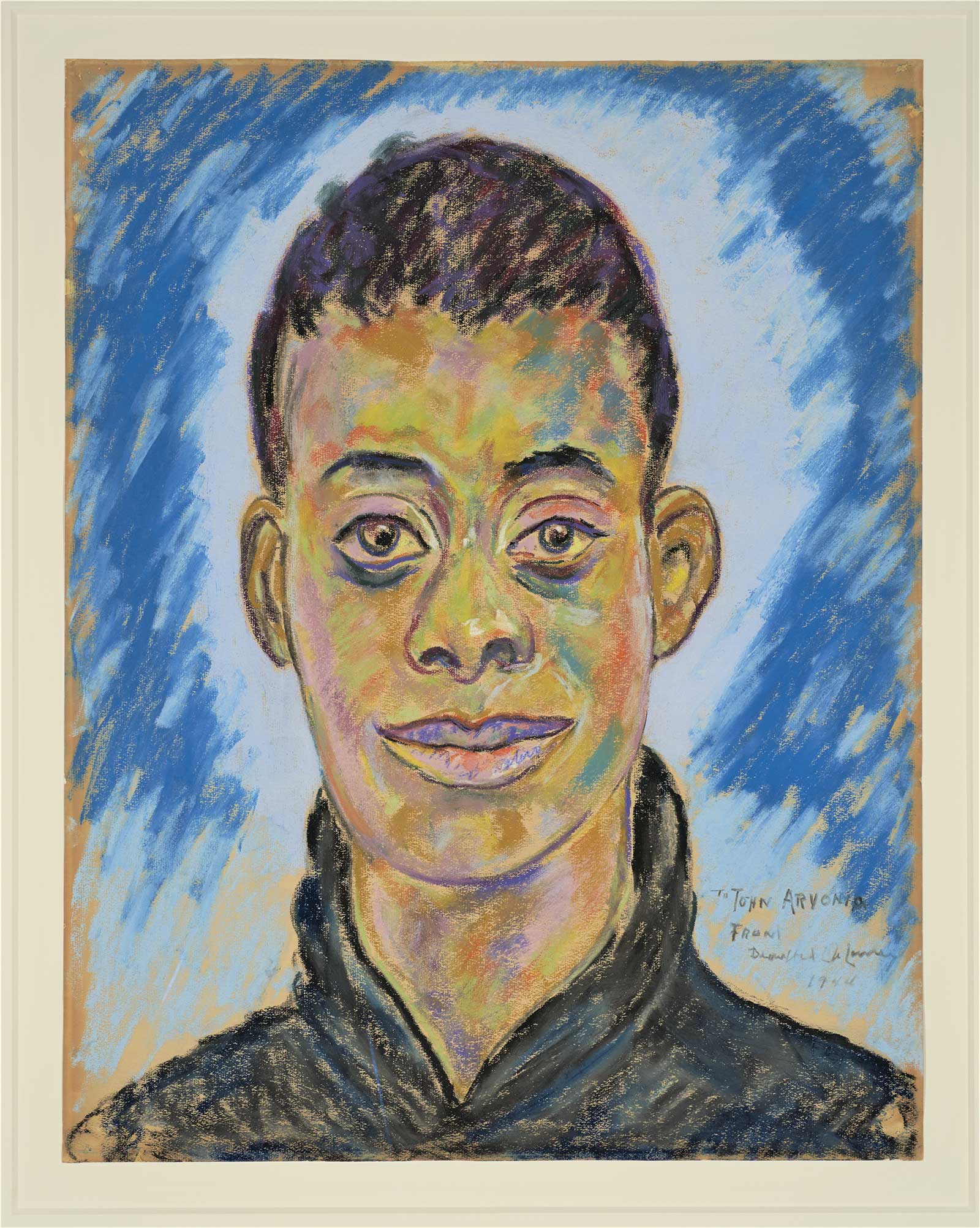
Beauford Delaney (1901-1979), Portrait of James Baldwin, 1944. Pastel on paper. Knoxville Museum of Art, 2017 purchase with funds provided by the Rachael Patterson Young Art Acquisition Reserve; © Estate of Beauford Delaney, by permission of Derek L. Spratley, Esquire, Court Appointed Administrator, Courtesy of Michael Rosenfeld Gallery LLC, New York, NY.
Katz explains, “Art can tell this story uniquely well. While written narratives must necessarily use specialized words to describe ideas, visual imagery is more elastic, allowing for coincident layers of meaning.”
The exhibition is in eight sections beginning with Beyond the Binary, which focuses on art from a period when “same-sex desire and different-sex desire were not always seen as distinct opposites.”
Portraits is a large section devoted to artists and writers who openly explored and, in some cases, presented a homosexual identity, and includes portraits of Gertrude Stein, Oscar Wilde, Thomas Eakins’ poignant oil sketch of his friend and lover, Walt Whitman, and a rare pastel sketch artist Rosa Bonheur by her lover Anna Klumpke.
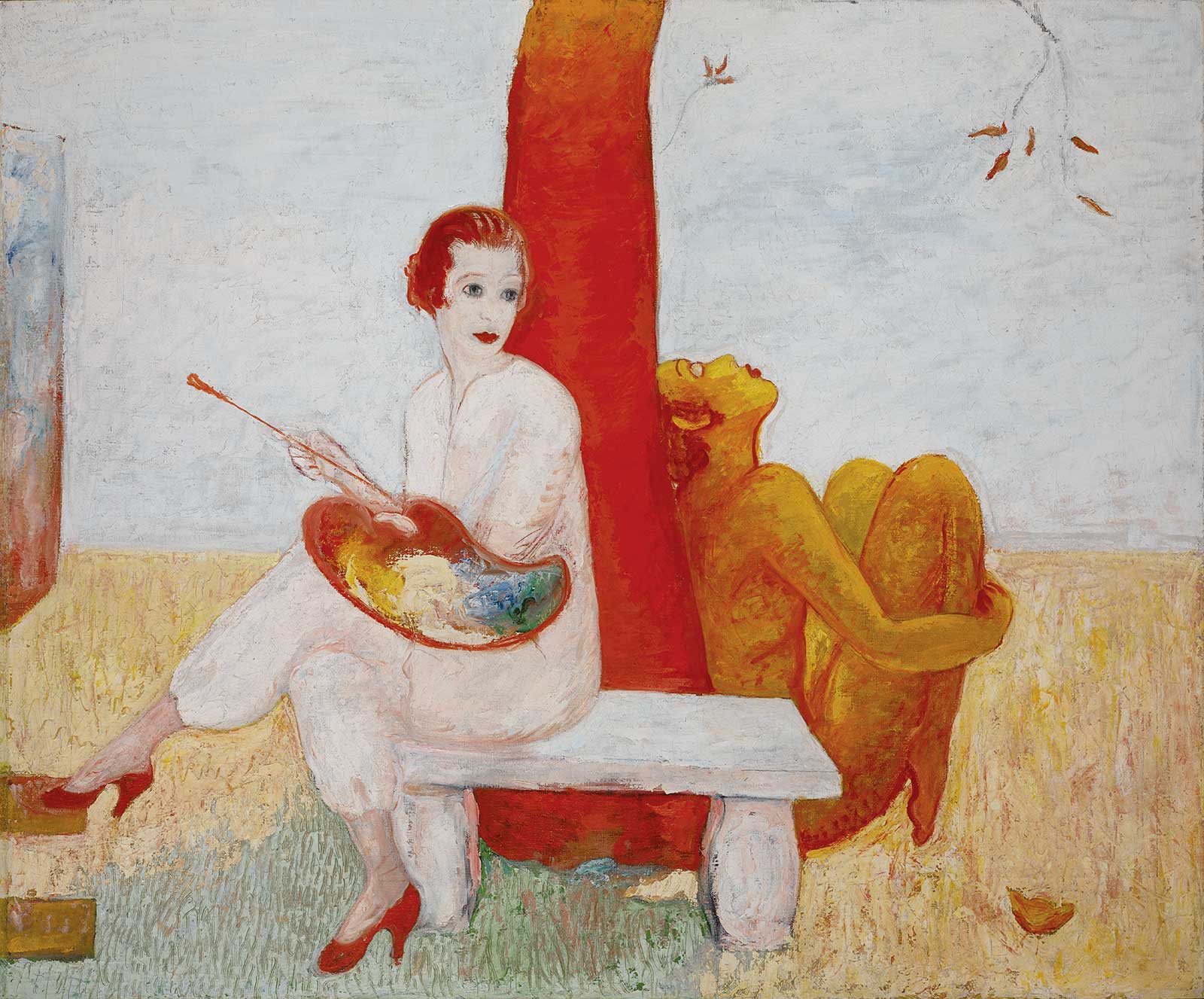
Florine Stettheimer (1871-1944), Self Portrait with Palette (Painter and Faun. Oil on canvas. Art Properties, Avery Architectural & Fine Arts Library, Columbia University in the City of New York. Gift of the Estate of Ettie Stettheimer.
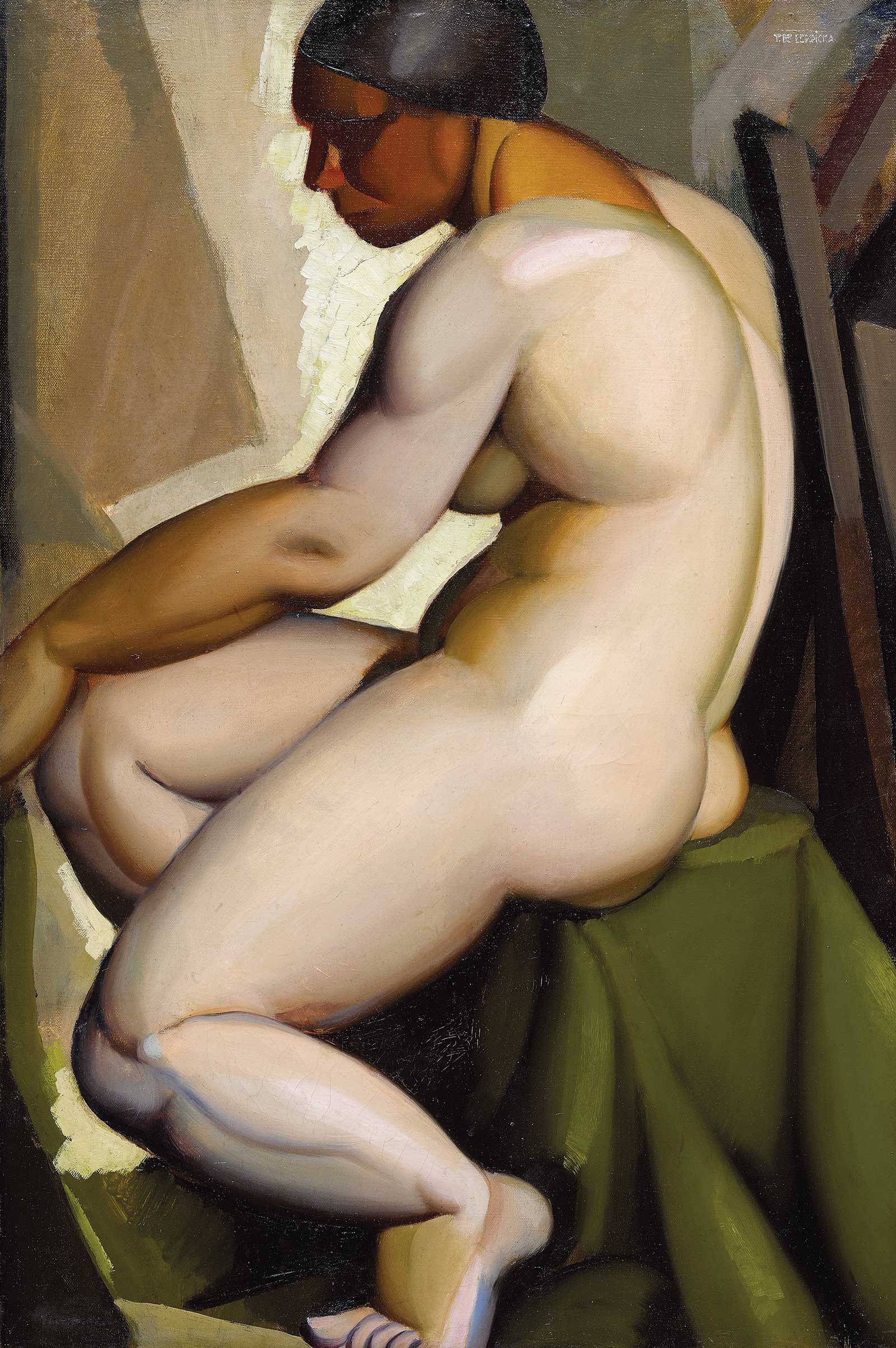
Tamara de Lempicka (1894-1980), Nu assis de profil, 1923. Oil on canvas, 32 x 21¼ in. Döpfner Collection, Germany. Image courtesy of Sotheby’s.
One fascinating aspect of the exhibition deals with relationships.
Beauford Delaney’s Portrait of James Baldwin, 1944, is on loan from the Knoxville Museum of Art. The museum notes, “Baldwin, who met Delaney as a teenager, came to regard the painter as a father figure, muse and model of perseverance as a gay man of color. Delaney found in Baldwin a powerful intellectual and spiritual anchor who inspired some of his finest works.”
Romaine Brooks’ symbolist painting Le Trajet (The Journey), circa 1911, in the Smithsonian American Art Museum, depicts her lover Ida Rubinstein as the embodiment of ethereal, androgynous beauty. Although their relationship lasted only three years, Rubinstein’s ideal presence occurred in many of Brooks’ later paintings.
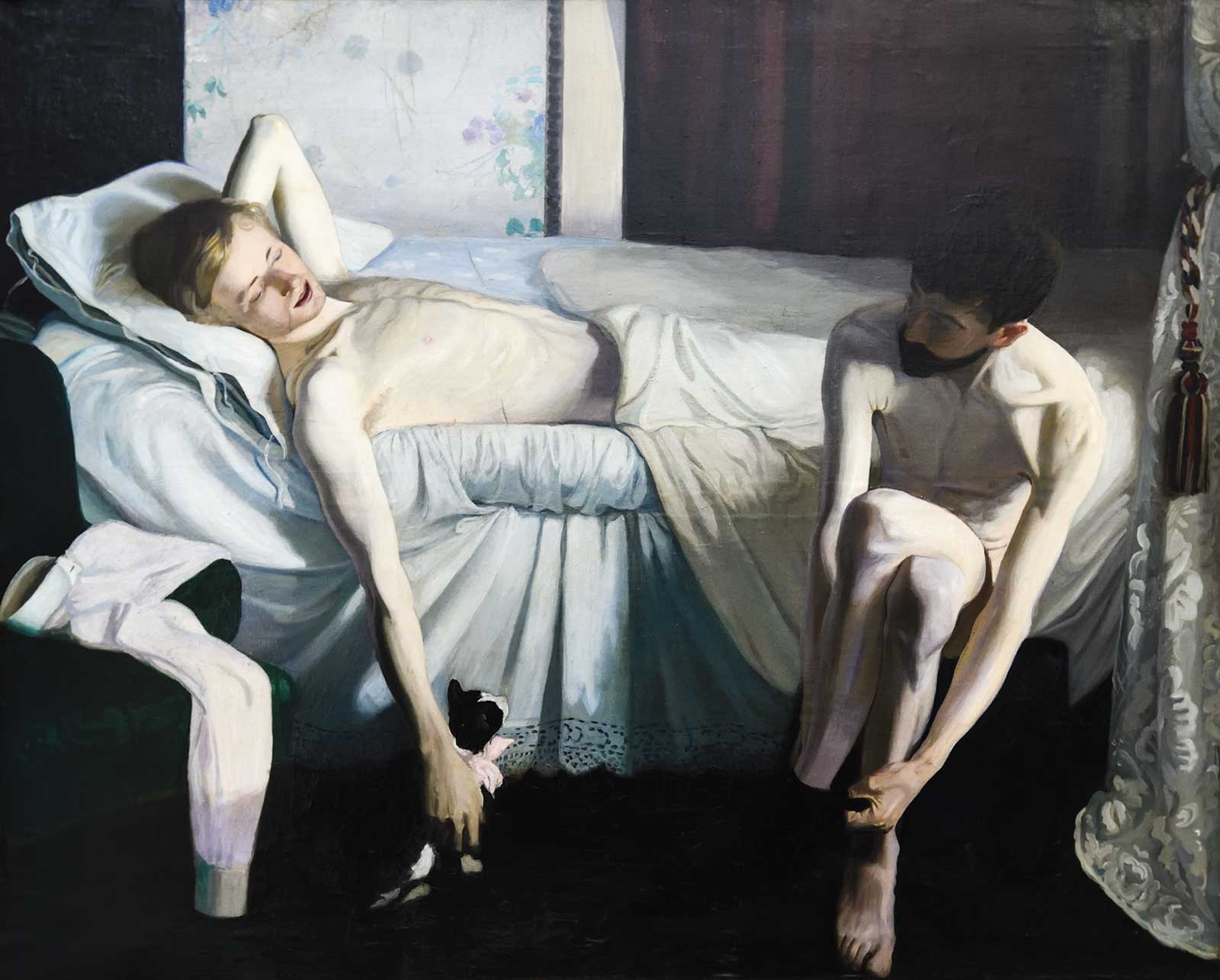
Andreas Andersen (1869-1902), Interior with Hendrik Andersen and John Briggs Potter in Florence, 1894. Oil on canvas, 50½ x 63 in. Under license from MiC - Direzione Musei Statali della Città di Roma - Photographic Archive; by permission of the National Museums Directorate of the City of Rome - Hendrik Christian Andersen Museum.
Subsequent sections include Changing Bodies, Changing Definitions, which examines evolution of the genre of the nude in relation to shifting conceptions of sexuality; History, Colonialism and Resistance; Performing; and, lastly, Beyond the Binary, which is comprised of 60 works that illuminate the mutuality of homosexual and trans identity in their earliest formations.
Chirag G. Badlani, executive director of the Alphawood Foundation, comments, “Alphawood has been committed to this project since its very conception. We are proud to have supported it at the scale it required through more than six years of global research, and are even more proud to support it now amidst a global wave of anti-LGBTQ actions.” —
Powered by Froala Editor